Protect seedlings against wilting

Root-rot diseases are one of the many challenges that small-grain farmers have to deal with on an annual basis. These diseases complicate production and threaten profit margins.
Soil-borne diseases are one of the primary threats to young plants, as they undermine seedling vigour and survival before any above-ground symptoms are apparent.
Adding to the complexity of the situation, is the fact that root-rot diseases are usually caused by a root-rot complex comprising more than one type of pathogen. Fungal and oomycete species are the dominant participants in the complex, while bacteria and viruses are also known to cause root rot.
The four most common root-rot diseases in barley and wheat are caused by fungi that live in the soil. These are Pythium spp. root rot, also known as seedling wilt; Fusarium root rot; Fusarium ear scorch; and Rhizoctonia root rot.
The fungi are common in all cultivated soils and can live in the soil on crop debris or as hardy oospores for a long time. When climate conditions are favourable, especially when adequate moisture and a suitable host plant is present, the oospores will become active and infect crops on the field. As these fungal diseases also occur on other crops, such as maize and vegetables, they are difficult to control, especially where crop rotation is not an option.
Pythium spp. has a specific preference for the juvenile tissue in young seedlings and hardly ever affects mature plants. The fungus infects the germinating wheat and barley seeds to feed on the sugars stored in the endosperm. This weakens the seedlings, causing them to emerge as wilted and fragile little plants. Infected seedlings usually suffer from poor root-system development, which negatively impacts water and nutrient uptake and eventually reduces yield. Affected seedlings become stunted, develop brown, rotted roots and may lodge.
Because the infection occurs at a very early stage, it is not always correctly diagnosed. Poor germination and emergence are often attributed to poor-quality seed or other soil-borne diseases such as Rhizoctonia spp. or Fusarium spp.
Symptoms include:
- darkened and poorly developed plant roots and crown
- spikes turning white before healthy plants begin to mature
- heads and kernels do not fill
- stunted plants that produce few tillers
Seed treatment offers excellent preventive control as it can reduce stress on the seedling during the first 4-6 weeks after planting, enabling seedlings to reach their full yield potential. The protection seed treatments offer also gives the seedling an opportunity to develop a strong and healthy root system.
“We focus on treating seed against fungal infection so that crops can develop healthy, robust root systems that function optimally. Well-formulated products, such as Syngenta’s CELEST® Top, not only protect the seed and seedling, but also promote uniform crop establishment and the development of healthy root systems that lay the foundation for optimal crop yield and quality,” says Jurgens Minnaar, business manager of Syngenta Seedcare in South Africa.
Seed treatments offer a range of benefits:
- Ensure healthy and vigorous seed.
- Improve the visual appearance of seed.
- Improve the plantability of seed as only the best polymer seed coatings are used to ensure the treatment binds with the seed.
- Simplify crop management during planting as various seed treatment products can be applied on the seed simultaneously.
- Protect germinating seed and young seedlings from the outset when they are at their most vulnerable.
- Proper protection during planting ensures realisation of the planned planting population.
- Enable healthy and strong root system development from an early stage to ensure effective uptake of water and nutrients.
Compounds are purposefully formulated to be target specific.
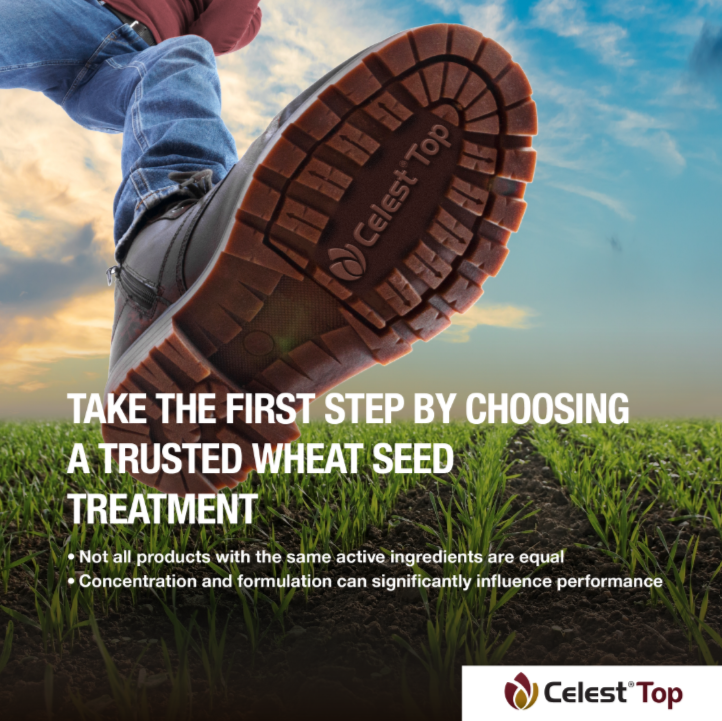
CELEST® Top not only offers protection against Pythium spp. but also against Fusarium and several other soil- and seed-borne pathogens, diseases and insects. It is the only registered seed treatment against Fusarium in South Africa.
CELEST® Top is a liquid concentrate fungicide and insecticide with contact and systemic properties for the control of diseases and insects that affect crops as indicated on the label. The three active ingredients, (two fungicides - difenoconazole (triazole) and fludioxonil (phenylpyrrole), with thiamethoxam (neonicotinoid) provide protection against fungi and insect activity without affecting the germination of the treated seed.
“The efficacy of seed treatments against root diseases is the reason why all pre-base and base wheat seed in the Sensako brand are treated with CELEST® Top,” says Hendrik van Staden, Syngenta Seeds’ seed business unit lead for Africa and the Middle East.
For more information, visit our website at https://www.syngenta.co.za/product/crop-protection/celest-top